Water source and route
Where water enters, whether it moves across the surface or through shallow soil, and where it can responsibly finish.

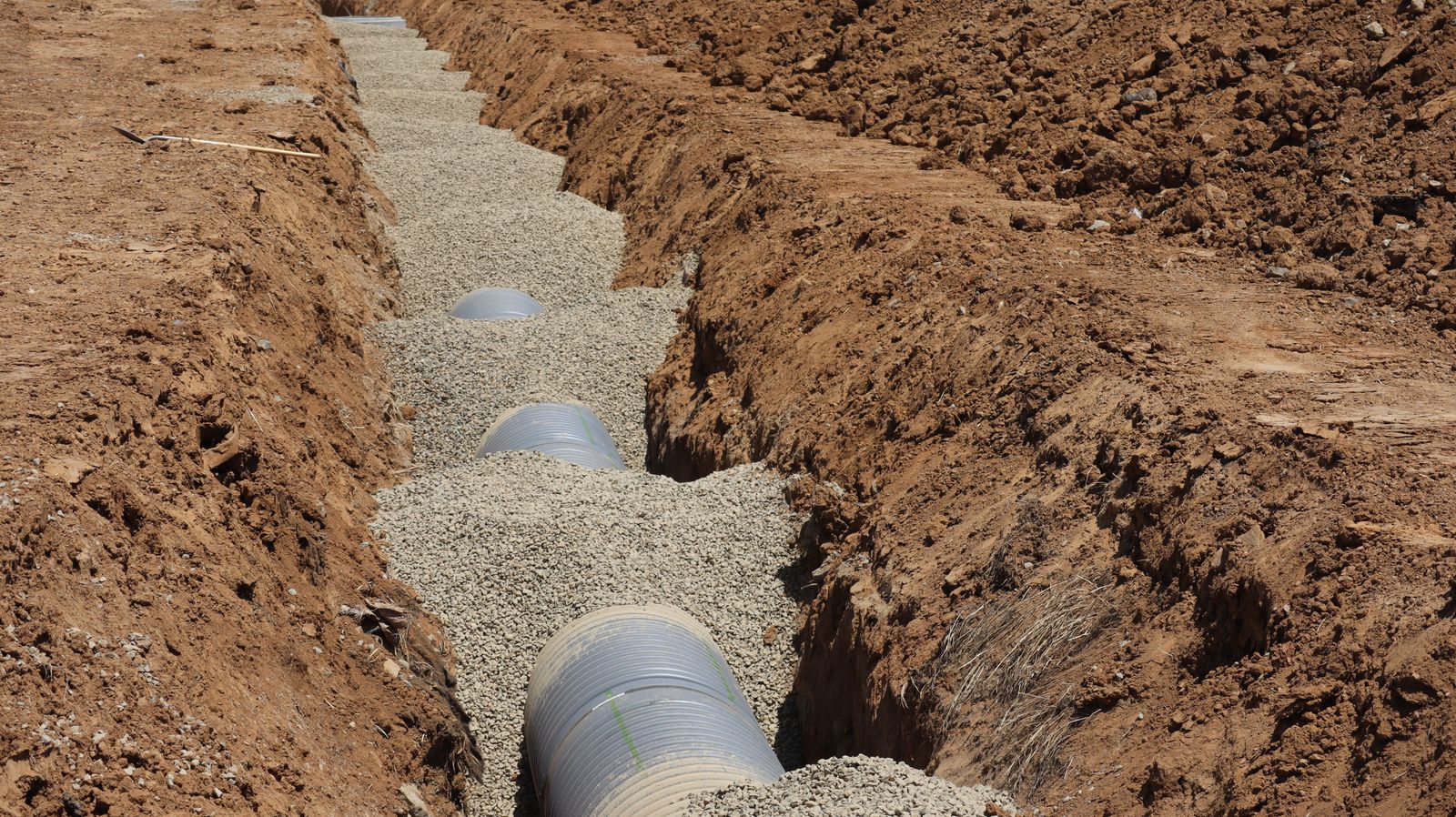
A responsible proposal follows the water path and site constraints. It cannot be reduced to a made-up per-foot price before the route, depth, outlet, access, soil, and restoration are understood.
Trench length is only one part of the work.
Depth, Oklahoma clay, roots, utilities, gates, fences, hardscape crossings, spoil removal, gravel and pipe specifications, equipment access, and surface restoration all affect the job. The proposed outlet matters just as much: water needs a continuous, responsible route on private property.
A low spot caused by grade may call for regrading or a swale instead of a French drain. Comparing the right system prevents a price discussion from starting with the wrong repair.
Where water enters, whether it moves across the surface or through shallow soil, and where it can responsibly finish.
Trench depth, clay, roots, utilities, gates, structures, and whether equipment can reach the route.
Pipe, aggregate, fabric where appropriate, soil handling, and restoring turf or landscape surfaces after work.
Ask each provider to identify the route, outlet, approximate depth and length, materials, utility-locate responsibilities, restoration, exclusions, and what happens if buried conditions differ. A lower number can describe less work rather than a better price.
Record where water begins, how it travels, where it stops, and how long the area stays wet.
Confirm why a French drain fits better than grading, a swale, or correcting a downspout route.
Discuss scope, access, outlet, restoration, timing, and property-specific price before agreeing.
OKC French Drain connects homeowners with a drainage service partner. Share the address and what happens during and after rain, then discuss fit and a property-specific proposal. Nothing is booked until you agree.