Persistent soft strip
A narrow area that stays saturated after surface water recedes can point to shallow subsurface movement.

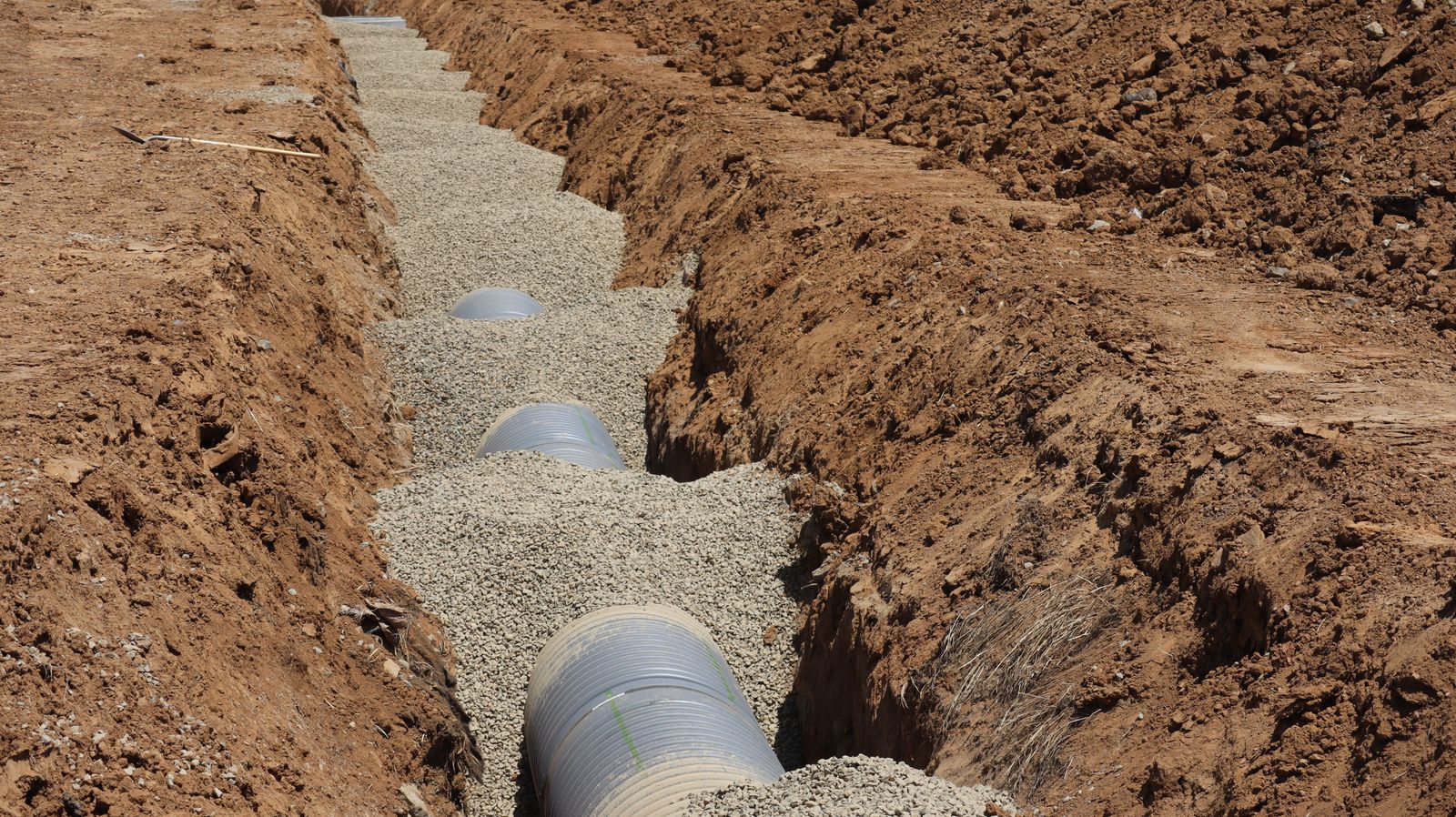
French drain installation in Oklahoma City starts with the water path: where water starts, where it sits, how it would leave on this private property, and whether a trench is even the right tool. Call 405-529-9406 or walk the checklist below.
It intercepts water moving through shallow soil. It does not erase a bad outlet.
A French drain may be considered when water moves through shallow soil, follows a grade break, or keeps a strip of yard wet after nearby surface water has receded. Site review should distinguish that pattern from roof discharge, broad sheet flow, a settled low spot, irrigation, a plumbing issue, or water that has no responsible outlet.
If water is visibly crossing the lawn, start with yard drainage & regrading or grading, swales & berms. If a puddle sits in a settled pocket, read standing water in the yard first. This page owns installation only when a private-property outlet can be discussed—not a street, curb, or city drain.
The route should account for elevation, soil conditions, utility locations, structures, fences, walks, roots, access, discharge conditions, and how the disturbed area will be restored. No single trench depth, pipe layout, rock quantity, or outlet arrangement applies to every property. Cost talk stays on the Oklahoma City cost guide—this page does not publish a price.
A narrow area that stays saturated after surface water recedes can point to shallow subsurface movement.
If water is visibly crossing the surface, changing the surface route may be more direct than intercepting shallow soil water.
The route needs a practical lower destination that remains on private property and does not create a new nuisance.
Fill what you can see. Leave the rest unknown. The output is a copyable talk-through for the address form or a call to 405-529-9406—not a design, not a “feasible” stamp, and not a price.
A short look at the trench and the outlet. Stay on this page—then we still start with your street address.
More clips on YouTube. Or call 405-529-9406.
Choose grading or a swale first when water sheets visibly across the lawn, stalls behind an edge, or collects because the finished surface has settled. Those problems are read from visible contours on yard drainage and grading / swales.
Start with standing water when the clue is a repeat puddle in a low spot. That page is standing water in the yard.
Consider French drain installation when water moves through shallow soil, seeps from a slope, or keeps a defined strip saturated even after visible runoff passes. Some yards need both: surface contours to manage sheet flow and a French drain to intercept shallow subsurface water.
Coverage still starts with the street address. Oklahoma City notes live on the Oklahoma City service-area page. A Midwest City backyard that floods after rain starts on the Midwest City page—that page keeps shop versus Public Works honest. If you are still deciding shop versus city, use the flooded-yard decoder.
The address review compares source, soil, route, depth, outlet, utility conflicts, restoration, and maintenance. It is not a remote construction specification or price promise. Scope-before-price notes are on the French drain cost guide.
The drain has to collect the right water, maintain fall, discharge responsibly, and leave the property usable after restoration.
Document the source, saturation line, structures, utilities, trees, boundaries, access, and intended private-property outlet.
Prepare the trench, gravel envelope, landscape fabric where appropriate, and perforated or solid conveyance segments for the property-specific route.
Confirm the route before closing the trench, then restore soil, turf, planting, and access areas included in the agreed scope.
We market exterior landscape drainage. We do not offer curb cuts or penetrations, public right-of-way work, public storm-drain work, or municipal storm or sanitary connections.
Checks that keep the first conversation about your property—not a generic product pitch.
Yes—French drain installation in Oklahoma City is the primary conversation when a defined strip stays wet after surface water recedes. We still start with the street address, the water path, and a private-property outlet. A French drain is not the answer for every puddle, and we do not cut curbs or tie into public storm systems. Call 405-529-9406 or use the checklist, then send the address.
No. A French drain may help some shallow subsurface-water conditions, while visible surface runoff or a settled low spot may call for grading, a swale, or another ordinary drainage correction. Site conditions determine fit.
Photos can help show the water pattern, but they do not establish elevations, utilities, access, soil conditions, or a responsible destination. A final route should not be promised from remote information alone.
It turns what you can see—source, where water sits, how long it stays wet, surface versus soft-soil clues, a proposed private-property outlet, route blocks, and access—into a copyable talk-through for the address form. Empty fields stay unknown. It is not a design, not a feasibility stamp, and not a price.
No. Installation stays on private property. We do not cut curbs, work in the public right-of-way, or connect to municipal storm or sanitary systems. If the only outlet you can picture is the street, leave that field unknown and send the address anyway.
Send the full address plus the water-path list if you built one: storm timing, how long the soil stays soft, and where a private-property outlet might exist. We will use that context to compare a French drain with grading or a swale. Or call 405-529-9406.
Form didn’t load? Call us at 405-529-9406.
Nothing is booked until you agree.