Water concentrates first
Note whether soil loss happens during one concentrated route or across a broad slope. Photos during rain and after water recedes help show the sequence.

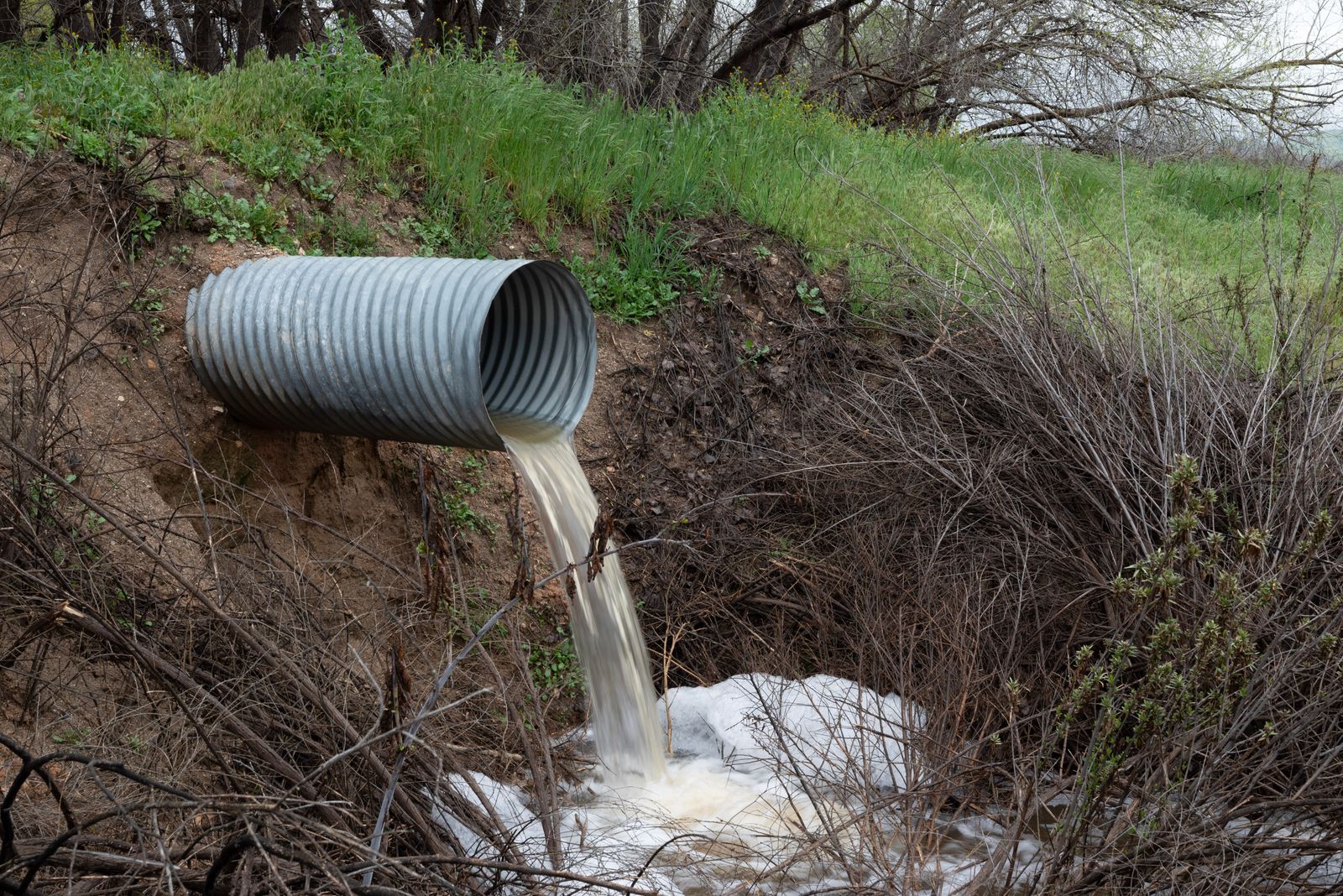
Correct the water route first, then stabilize the soil. Small walls are only incidental to drainage—not a standalone retaining-wall offer.
Correct the route first. Then stabilize what the water damaged.
Useful observations include roof and hard-surface discharge, uphill flow, grade breaks, bare channels, exposed roots, displaced mulch, sediment deposits, low points, structures, fence lines, and property edges.
Depending on the pattern, the ordinary drainage response may include limited regrading, a shallow swale, a low berm, low-spot correction, or a French drain where shallow subsurface water is present. After the source and route are addressed, the disturbed or eroded area may need appropriate stabilization and restoration.
Note whether soil loss happens during one concentrated route or across a broad slope. Photos during rain and after water recedes help show the sequence.
This page does not promise a universal material, planting, blanket, stone, wall, or maintenance method.
An ordinary small landscape wall may be considered only when it is a minor component of a private-property drainage or grading plan and does not call for engineering, permits, significant loading, or high-consequence retention.
Choose grading or a swale first when water sheets visibly across the lawn, stalls behind an edge, or collects because the finished surface has settled. Those problems are read from visible contours.
Consider a French drain when water moves through shallow soil, seeps from a slope, or keeps a defined strip saturated even after visible runoff passes. Some yards need both: surface contours to manage sheet flow and a French drain to intercept shallow subsurface water.
The address review compares source, soil, route, depth, outlet, utility conflicts, restoration, and maintenance. It is not a remote construction specification or price promise.
Send the full address, where water begins, the route and low point, rain-time photos or video, how long the area remains wet, where soil or mulch is being lost and deposited, nearby structures and property edges, access constraints, the private-property destination being considered, and why a wall is being requested.
Identify where flow narrows or speeds up before selecting cover or fill.
Regrading, swale, berm, low-spot correction, or French drain may belong in the plan depending on the pattern.
If engineering, permits, significant loading, or uncertainty appear, the wall path stops for specialist review.
We market exterior landscape drainage. We do not offer curb cuts or penetrations, public right-of-way work, public storm-drain work, or municipal storm or sanitary connections.
OKC French Drain does not use this page to offer engineered, structural, load-bearing, code-triggering, permit-dependent, uncertain, or high-consequence wall work. A wall request that cannot be clearly qualified as a minor drainage-support feature stops here and should be referred for appropriate specialist review.
Two checks that keep the first conversation about your property—not a generic product pitch.
Not usually. If concentrated water continues to cross the area, replacement material can move again. The water source, route, low point, and destination should be addressed before stabilization and restoration are selected.
No. A small landscape wall may be considered only as a minor part of an ordinary private-property drainage or grading plan. Any wall involving engineering, structural design, permits or code triggers, significant loading, uncertain conditions, or high-consequence retention is outside this service scope and needs the appropriate specialist.
Send the full address, storm timing, how long the soil stays soft, and where a private-property outlet might exist. We will use that context to compare a French drain with grading or a swale.
Form didn’t load? Call us at 405-529-9406.
Nothing is booked until you agree.